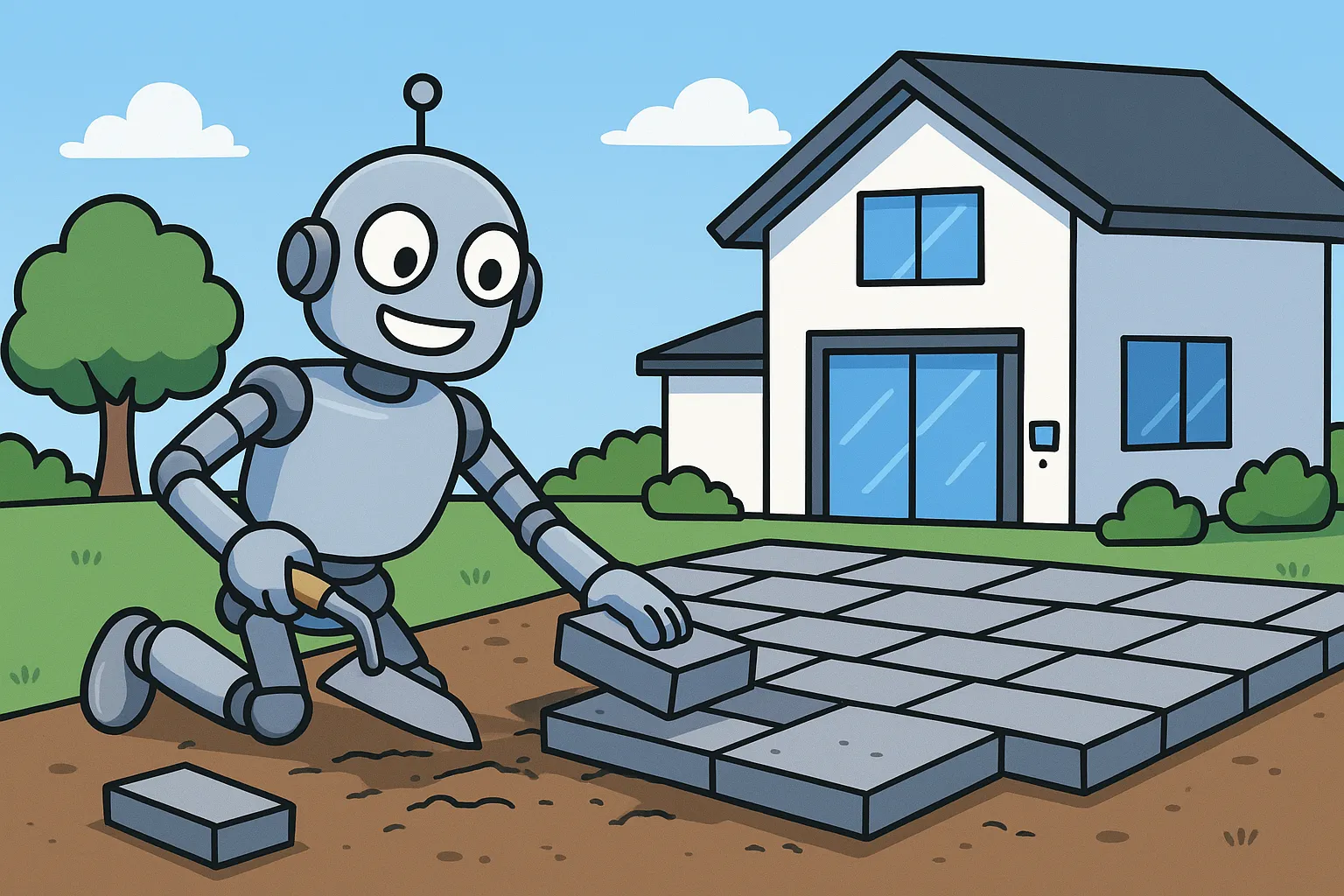
The Foundation Sprint: Why We Clean House Before Building New Rooms
July 21
It’s Monday morning: I’m fresh off the weekend’s 642x performance breakthrough, staring at a backlog full of shiny new features I could build, and instead deciding to… clean house?
I know. It sounds like the kind of decision that makes stakeholders twitchy and developers roll their eyes. But sometimes the smartest thing you can do after a big win is not to immediately pile more stuff on top of it.
Sometimes you need a Foundation Sprint.
The post-victory moment
Sunday had been one of those magical development days. We’d achieved a 642x performance improvement in our content search, deployed production-grade staging infrastructure, and integrated natural language search end-to-end. The kind of day that makes you want to screenshot everything and frame it.
But as I reviewed our session logs that evening, I kept noticing the little things: test failures that were probably nothing, intent classification gaps that users might hit, version inconsistencies that could bite us later. The kind of technical debt that accumulates even when — especially when — you’re moving fast and building cool stuff.
Mind you, this wasn’t emergency firefighting. Our system was working beautifully. This was something different: the recognition that a solid foundation makes everything else possible.
The 8-minute miracle (and why it wasn’t actually magic)
Here’s what happened when we tackled PM-039, our intent classification improvements:
Estimated time: 1–2 days Actual time: 8 minutes
Eight. Minutes.
For context, that’s faster than most standup meetings. Faster than most coffee orders. Definitely faster than the time it took me to write this paragraph.
But here’s the thing — it wasn’t magic. It was the compound effect of systematic foundation work.
When Claude Code deployed to implement PM-039, he found:
- Clean architectural patterns already established
- Comprehensive test frameworks in place
- Clear documentation of existing intent patterns
- Zero conflicting systems to work around
So instead of spending hours untangling dependencies or figuring out where things belonged, he could focus entirely on the actual work: adding 15+ new search patterns with full TDD coverage.
What we didn’t spend hours on: debugging a bunch of spaghetti code.
This is what foundation work gets you — not just working code, but fast working code.
The archaeological approach to technical debt
We took what I started calling an “archaeological” approach to our test infrastructure issues. Instead of treating failures as random annoyances, we treated them like artifacts that could tell us stories about our system’s evolution.
Layer 1 (Surface): Basic infrastructure failures — connection timeouts, environment setup issues
Layer 2 (Structural): Architectural patterns that had evolved but weren’t documented
Layer 3 (Historical): Configuration approaches that made sense when written but had become inconsistent over time
Each layer revealed something different about how our system had grown. Some “failures” turned out to be our system getting smarter faster than our tests could keep up (sound familiar?). Others showed us places where we’d built quick solutions that were now ready for proper architecture.
The key insight: technical debt isn’t just accumulated cruft. It’s archaeological evidence of how your system learned to work.
The prioritization trategy
Instead of trying to fix everything at once (the classic mistake), we broke our test infrastructure work into five distinct groups:
- Groups 1–2: Core infrastructure reliability — the stuff that had to work for anything else to work
- Group 3: Configuration pattern standardization — one clear way to do common things
- Groups 4–5: Edge cases and optimization opportunities — nice to have, but not blockers
This isn’t revolutionary project management, but it is disciplined project management. And discipline compounds.
By the end of the day, we’d gone from 85.5% test reliability to 91%+ reliability, created proper architectural decision records (ADRs) for the stuff we couldn’t fix immediately, and turned vague “technical debt” into specific GitHub issues with clear acceptance criteria.
Why foundation work isn’t overhead
I used to think of foundation work as the tax you pay for moving fast. The necessary evil that slows down feature development. I’ve changed my mind.
Foundation work creates compound interest for your development velocity.
Think about it: every minute Claude Code didn’t spend on PM-039 untangling configuration inconsistencies was a minute it could spend on the actual intent patterns. Every test that runs reliably is feedback it gets immediately instead of having to second-guess. Every architectural decision we documented is context it doesn’t have to rediscover.
When I say “Claude Code implemented,” by the way, I mean it suggested an approach, I reviewed it, and we moved forward together. The speed at which he could suggest good approaches was directly related to how clean our architectural foundation was.
The “clean house first” philosophy
There’s this moment in any growing codebase where you have to choose: do you keep building on top of what you have, or do you take time to strengthen what’s underneath?
Most teams, under pressure to ship features, choose to keep building. And for a while, that works. Until it doesn’t.
We chose differently. After our 642x performance win, instead of immediately piling on new features, we dedicated a full sprint to foundation strengthening.
Here’s what we discovered: the stronger your foundation, the faster you can build.
It’s counterintuitive. Foundation work feels like you’re not making “real” progress because users can’t see it. But it’s exactly that invisible infrastructure that makes visible progress possible.
The compound effects
By Wednesday, when we tackled Python version consistency (PM-055), we found that most of the potential blockers had already been eliminated by our systematic cleanup work. What could have been a painful migration became a straightforward upgrade because we’d already addressed the underlying inconsistencies.
This is what compound effects look like: work that seems unrelated starts connecting in unexpected ways. Configuration cleanup helps with version upgrades. Test reliability improves debugging speed. Clear architectural patterns make feature implementation faster.
And suddenly your estimates start looking ridiculous because you’re working with good infrastructure instead of fighting it.
When good process meets good architecture
The real lesson from our Foundation Sprint isn’t about any specific technique or tool. It’s about the interaction between process discipline and architectural thinking.
- Good process without good architecture gets you reliable mediocrity.
- Good architecture without good process gets you elegant solutions no one can maintain.
- Good process with good architecture gets you 8-minute implementations.
The permission structure
Here’s the thing nobody tells you about foundation work: you have to give yourself permission to do it.
In most organizations, foundation work feels like slacking off. You’re not shipping features. You’re not fixing user-visible bugs. You’re just… making things better for developers.
But making things better for developers makes things better for users, just with a delay that’s hard to measure.
We created what I started thinking of as a “permission structure” for foundation work by:
- Calling it a sprint with clear goals and timeline
- Documenting specific outcomes and success metrics
- Connecting each foundation improvement to future feature velocity
- Celebrating the wins (8-minute implementations deserve celebration!)
The ADR advantage
One of our best decisions was creating ADRs (Architectural Decision Records) for the configuration patterns we couldn’t immediately standardize. Instead of letting architectural debt become tribal knowledge, we documented it explicitly.
This transformed “we should probably fix this someday” into “here’s exactly what needs to be done and why.” Future teams (including future us) don’t have to rediscover the context or debate the trade-offs — they’re all documented.
I learned about ADRs from Claude. Embarrassing. I work with human engineers and had not encountered this term before. Then my boss John mentioned using them at Kind. Then we realized the bots can read the ADRs too and that keeping track of the reasons for your decisions provided incredibly useful context to future us, humans and bot alike.
What your foundation sprint might look like
If you’re thinking about your own foundation work, here’s what worked for us:
Start with archaeology, not renovation. Understand what you have before deciding what to change. Those test failures might be telling you something important about how your system evolved.
Group problems by impact, not difficulty. Fix the stuff that blocks everything else first, even if it’s harder than the cosmetic improvements.
Document decisions, don’t just implement them. The ADR you write today saves you hours of context-rebuilding next month.
Measure compound effects, not just immediate ones. That 8-minute implementation was the result of weeks of foundation work — but it was worth it.
Create permission structures. Foundation work needs explicit organizational support, or it gets deprioritized every time.
The Monday morning question
So the question for your Monday morning isn’t whether you have technical debt (you do) or whether foundation work would help (it would). The question is whether you’re willing to invest in compound returns instead of immediate gratification.
Sometimes the smartest thing you can do after a big win is not to pile more stuff on top of it.
Sometimes you clean house first.
The rooms you build afterward will be stronger, faster to construct, and much more pleasant to live in.