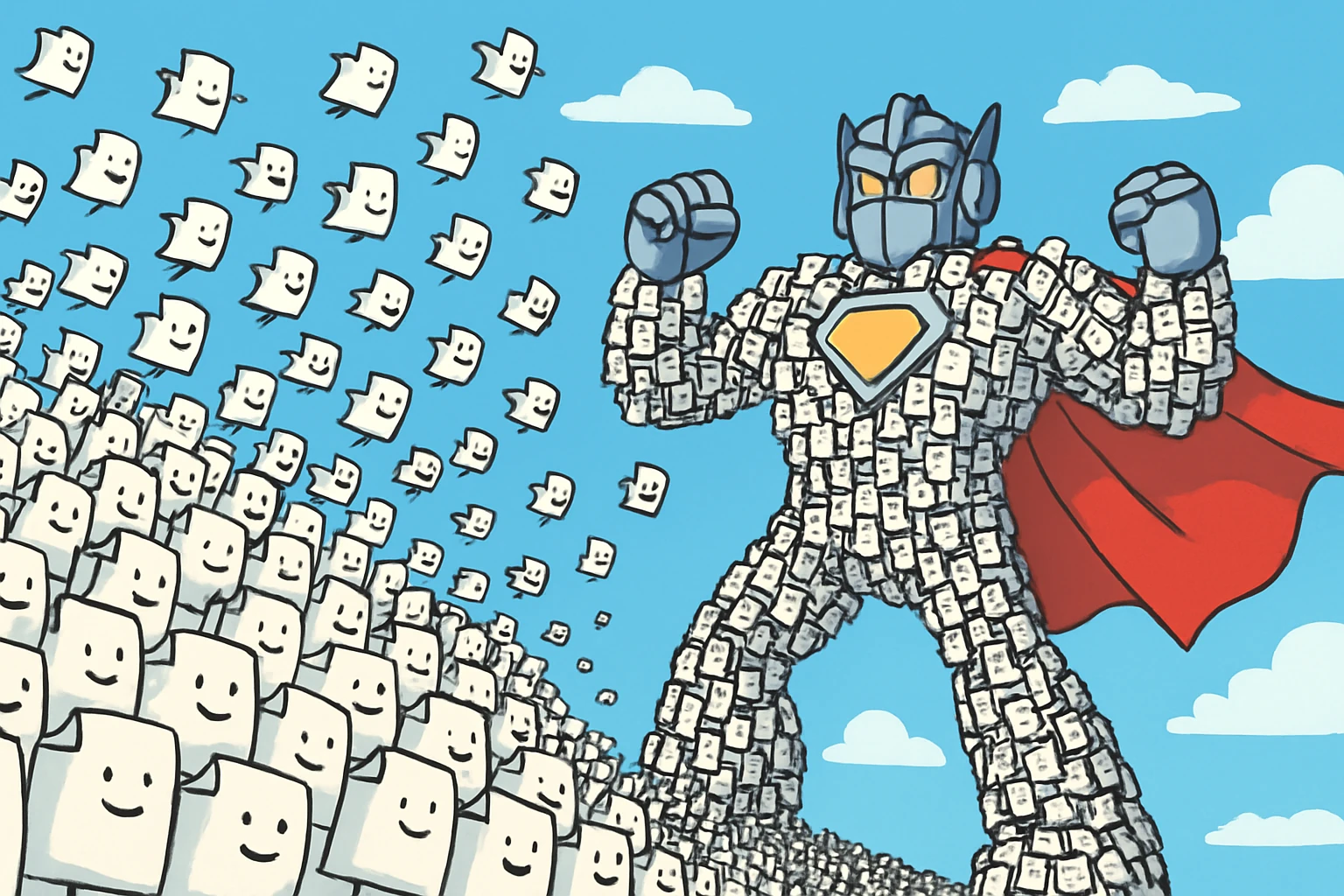
When 300 Files Work as One: The Perfect Storm
July 25
Or… How systematic methodology survives laptop crashes, AI meltdowns, and the humbling discovery that 0% of your “production-ready” system actually works
It was Friday morning, and I was riding high on Thursday’s 26-minute miracle, ready to start “Activation & Polish Week” with some light user experience improvements. The plan was simple: test a few workflows, identify polish opportunities, maybe clean up some error messages.
Then I tried to actually use Piper for real work.
Workflow success rate: 0%.
Not “needs some tweaking.” Not “mostly works but has rough edges.” Zero percent. Complete and total failure of every single workflow type.
The comedy of errors that followed became a perfect stress test of whether systematic methodology can survive when everything breaks at once — including the methodology itself.
The comedy begins: Friday’s greatest hits
10:20 AM: Discovery that workflows start but never complete. “Hmm, that’s odd.”
10:45 AM: Laptop crash during debugging session. Because of course.
11:15 AM: Cursor agent gets stuck in a loop, repeatedly asking for the same instructions from yesterday’s session. The AI equivalent of “did you try turning it off and on again?”
11:30 AM: Claude hits usage limits. Multiple agents now offline or confused.
12:00 PM: The humbling realization — we’d been testing components in isolation but never actual user journeys. Classic “integration reveals all” syndrome.
12:15 PM: System crashes again. At this point, the perfect storm is in full swing.
(By the way, every time I say “we discovered” in this post, it really means I was frantically coordinating AI agents who were variously confused, overloaded, or stuck in yesterday’s context while trying to debug a system that had mysteriously stopped working overnight.)
The beautiful thing about systematic methodology is that it’s designed for exactly these moments — when Murphy’s Law meets software development at enterprise scale.
The scale discovery: a surprisingly modular system
In the middle of debugging chaos, we made an interesting discovery about what we’d actually built:
Piper Morgan codebase statistics:
- ~310 Python files
- ~72,000 lines of Python code
- ~240 lines average per file
That last statistic stopped me cold. 240 lines average per file.
Most enterprise codebases either have massive monolithic files (thousands of lines each) or fragmented chaos where nobody can find anything. But somehow, through months of systematic development, we’d hit that architectural sweet spot: extremely modular yet coherent.
Each file has a single responsibility. Clean interfaces. Discoverable patterns. It’s like microservices architecture within a monolith — the best of both worlds.
It’s not like we set out to do it this way! We didn’t say “make sure you put this code in hundreds of short files!” It kind of just evolved out of the approach and the iteration.