Analysis as Acceleration, Not Delay

December 8, 2025
The setup wizard needed refactoring. The main function ran 267 lines. Four separate API key sections each duplicated roughly 100 lines of nearly identical code. Not elegant, but functional, and we’d been focused on more pressing problems.
The real problem was that it had an old-school command line interface (CLI) and the terminal would not allow pasting of API keys, which required either typing them perfectly (nearly impossible, at least for me) or using a complicated work around to manually add them to a file. Not only did I want to save people the ridiculous typing but I also wanted to store people’s credentials in their keychain and not in the clear in any statics files in the project.
Monday morning, with CRUD operations finally working and six UI polish issues resolved, we had time. Not deadline pressure, not crisis urgency, just clear space to do something right instead of just getting it done.
The temptation was obvious: open the file, start refactoring, figure it out as we go. We knew the problem. We knew roughly what needed to happen. Why not just dive in?
Instead, we stopped and analyzed for forty-five minutes.
The planning session
Forty-five minutes doesn’t sound like much. But when you’re eager to start coding, when the problem seems clear, when you just want to make progress, it feels like forever.
We opened the file and documented what we saw. Not fixing anything yet, just understanding:
- Main wizard function: 267 lines, doing everything
- Four API key collection sections: OpenAI, Anthropic, Gemini, GitHub
- Each section: ~100 lines of nearly identical logic
- Pattern repeated four times: keychain check → environment variable check → manual entry → validation
- Total duplication: roughly 400 lines saying almost the same thing four different ways
Then we asked: what would “good” look like?
A single helper function that handled API key collection generically. Pass in the provider name, pass in whether it’s required, pass in any special validation rules. One function replaces four duplicate implementations.
We (verbally) sketched the interface. Thought through some edge cases. Identified what could be unified and what needed to stay provider-specific. Designed the solution before writing any code.
Forty-five minutes. Then we started implementing.
The implementation
Two hours later, the refactoring was complete.
The results:
- API key collection: 82% reduction (400 duplicate lines → 148-line helper)
- Main wizard function: 71% reduction (267 lines → 76-line orchestrator)
- All functions under 50 lines except justified complex helpers
- Zero duplicate code blocks over 10 lines
But more important than the metrics: no surprises, no backtracking, no “wait, this doesn’t work” moments halfway through. The implementation went smoothly because we’d answered all the design questions upfront.

The analysis meant we knew exactly what we were building. The helper function’s signature was clear. The edge cases were identified. The migration path was obvious. We didn’t discover problems during implementation because we’d already thought them through.
Why this is hard
Analysis feels like delay. It looks like delay. You’re not writing code. You’re not shipping features. You’re just… thinking. Documenting. Sketching interfaces.
And there’s always a voice saying: “We could be making progress right now. We could be halfway done already. This is just planning paralysis disguised as rigor.”
That voice gets louder when:
- The problem seems straightforward
- You’re confident you understand the solution
- You’re eager to see results
- Someone (even just future-you) is waiting
But here’s what that voice misses: the time you spend analyzing isn’t extra time on top of implementation. It’s time you either spend thinking carefully upfront, or spend thrashing, backtracking, and debugging later.
The forty-five minutes we spent analyzing Issue #439 wasn’t forty-five minutes added to a two-hour implementation. It was forty-five minutes that prevented those two hours from becoming six hours of implementation + debugging + refactoring the refactoring.
The alternative timeline
We can imagine the other path. Start refactoring immediately. Pull out the first duplicated section into a function. Seems to work. Pull out the second section. Wait, this one’s slightly different. Modify the function. Third section — another edge case. Modify again. Fourth section — now the function’s getting messy.
Realize the original design doesn’t handle all the cases cleanly. Refactor the helper function. Update all the call sites. Discover that GitHub API keys have different validation rules. Add a parameter. Discover that optional vs. required keys need different handling. Add another parameter.
Three hours in, the helper function has seven parameters, three of which are optional, and nobody (including you) is entirely sure which combination is valid. The code works, but it’s fragile. The next person (probably you in three months) will look at it and wonder what you were thinking.
That’s the thrashing tax. The cost of figuring things out during implementation instead of before it.
What analysis buys you
The forty-five minutes of upfront analysis bought us:
Clarity: We knew exactly what we were building and why Confidence: No second-guessing during implementation Speed: Two hours of smooth work instead of six hours of thrashingQuality: Clean interfaces, no parameter soup, obvious intent Documentation: The analysis itself became the design doc
But the biggest thing it bought us was freedom. Freedom to implement without constantly stopping to make design decisions. Freedom to focus on getting the code right instead of figuring out what “right” even means.
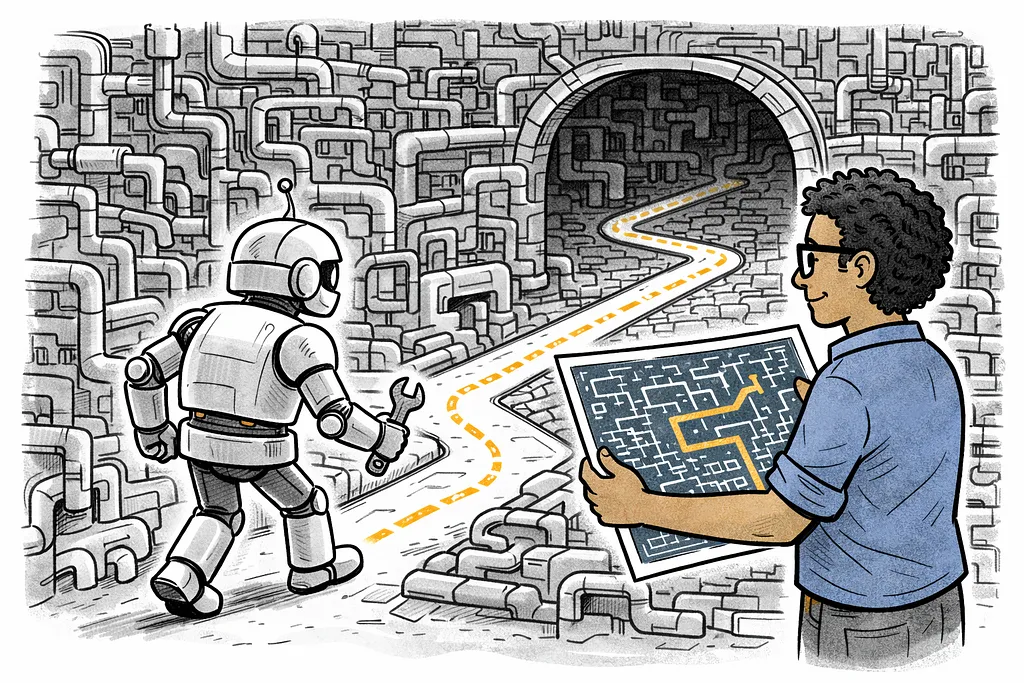
When you know where you’re going, the journey is faster. When you’re figuring out the destination while you’re traveling, every step requires navigation decisions.
The timing question
“But when do you know you’ve analyzed enough?”
Good question. Too much analysis is real — you can absolutely overthink things. But here’s a useful heuristic:
You’ve analyzed enough when you can describe the solution without writing code. When you can sketch the interfaces. When you’ve identified the edge cases. When you know what success looks like.
For Issue #439, that was forty-five minutes. For the S2 encryption sprint preparation, it was five hours creating a comprehensive review package. For simple bug fixes, it might be five minutes of reading the code to understand the problem.
The analysis time scales with complexity and stakes. A four-line bug fix doesn’t need a design document. A cryptographic implementation that handles sensitive user data needs careful architectural review.
But the principle holds: understand the problem before you solve it. Design the solution before you implement it. Think through the edge cases before you encounter them in production.
The productivity paradox
This creates an interesting productivity paradox. The day we spent forty-five minutes analyzing and two hours implementing, we closed one GitHub issue. The day before, diving straight into implementation, we closed six issues.
If you’re measuring productivity by issues closed per day, analysis looks inefficient.
But if you’re measuring by technical debt avoided, complexity managed, and future maintenance burden reduced, that forty-five minutes was one of the most productive investments of the week.
We didn’t just fix a problem. We fixed it in a way that makes the codebase simpler, more maintainable, and easier to understand. The next time someone needs to add an API key provider, they’ll follow the pattern we established. The cognitive complexity we removed doesn’t come back.
When to skip the analysis
There are times to skip detailed analysis:
Small, well-understood problems: If you’ve solved this exact thing before, you probably don’t need to re-analyze it.
Throwaway code: Prototypes and experiments benefit from exploration. Analysis is for code you expect to keep.
Time-critical bugs: If production is down, fix it first, analyze later. (But do analyze later — don’t let the emergency fix become permanent infrastructure.)
Learning exercises: Sometimes the fastest way to understand a problem is to try solving it and see what breaks.
But for production code that you expect to maintain, for complex problems with multiple edge cases, for refactorings that touch many files — analysis accelerates rather than delays.
The setup wizard refactoring proved it. Forty-five minutes of thinking. Two hours of implementing. Zero hours of debugging, refactoring the refactor, or explaining to future-you why the code is the way it is.
That’s not delay. That’s acceleration.