August 19
Tuesday started with a weeks-old mystery: Why does our TLDR system hang for two minutes before timing out? And ended with the discovery that we’d built a sophisticated testing infrastructure so comprehensive we’d forgotten it existed.
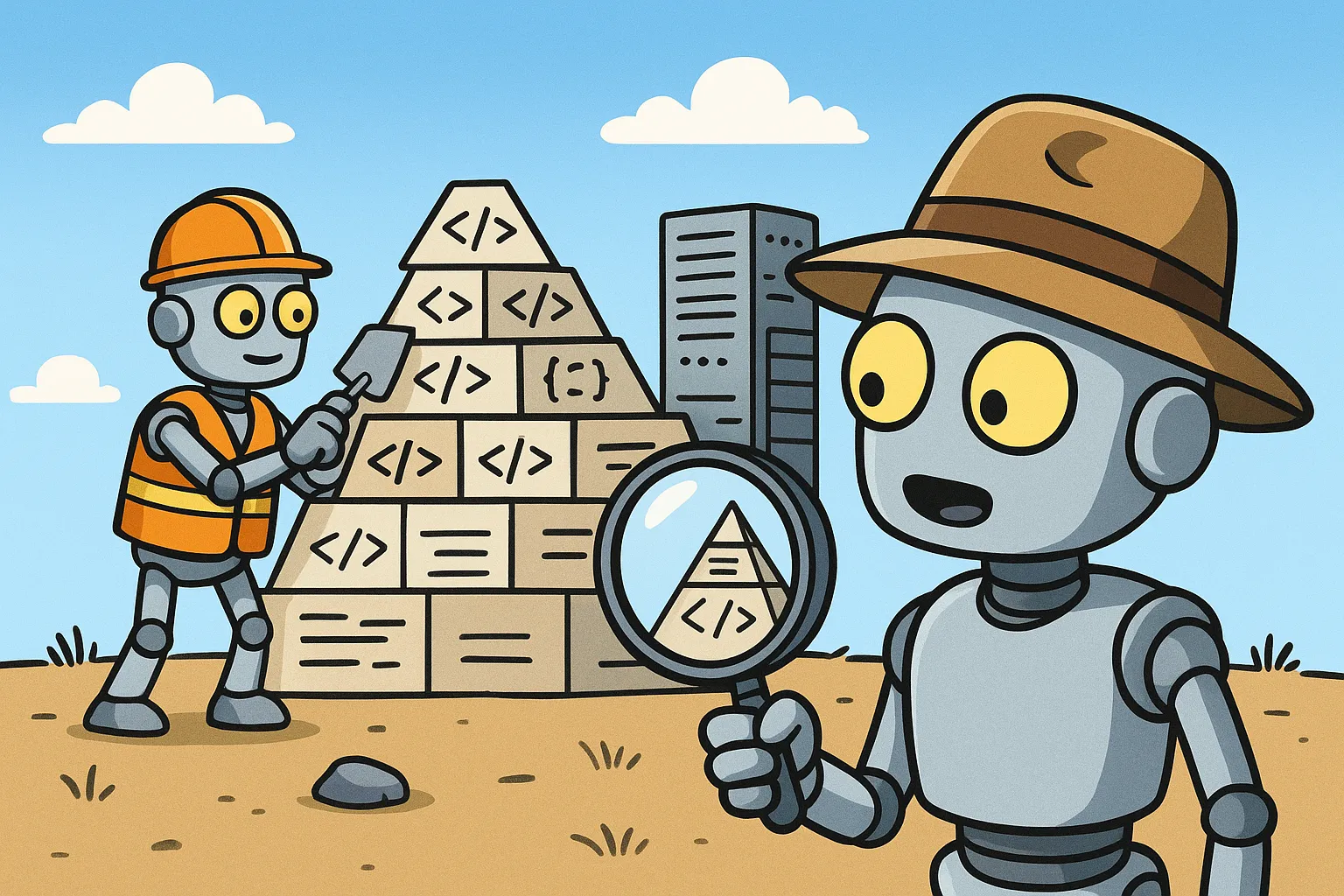
Like archaeologists marveling at monuments our ancestors built, we spent most of the day astonished by our own past work.
Ever had one of those moments when you remembered a whole summer from your childhood, or some other high point that had completed escaped your memory for years. It comes flooding back but you also wonder “How did I ever forget about this?”
The 50ms impossibility
The TLDR investigation finally revealed what should have been obvious: 50ms test timeouts are literally impossible in Python. Module imports alone take 50–500ms. We’d cargo-culted a solution from compiled languages (Go, Rust, Ruby) without adapting it to Python’s reality.
Three weeks of mysterious hanging behavior explained in one archaeological expedition. The system was discovering 3,973 test files (3,826 in virtual environments!) and trying to run them all with timeouts shorter than Python’s import overhead.
Classic case of “right idea, wrong ecosystem.” Fast feedback loops are essential — but 50ms in Python is fantasy, not engineering.
The infrastructure we forgot we built
While deprecating TLDR, we needed to implement the Chief Architect’s realistic approach: <5 second smoke tests using Python-appropriate timeouts. Expected to find maybe 14 existing tests we could mark as smoke tests.
The discovery: 599+ tests already marked with smoke markers across the entire codebase.
Not 14. Not 140. Five hundred and ninety-nine comprehensive smoke tests covering every major system, integration point, and performance target. Test collection executed in 0.33 seconds — fifteen times faster than the Chief Architect’s already-aggressive 5-second target.
This seems to be a side effect of the coding agents being much better at this than I am and throwing in quality that I didn’t even ask for.
We were like later civilizations discovering the achievements of their forebears, except the forebears were… us. Apparently past-us had systematically built comprehensive testing infrastructure and then failed to keep proper records of what we’d accomplished.
The monument builders we forgot we were
Here’s the embarrassing pattern: We’d written those 599 smoke tests during some earlier development phase, marked them properly with pytest markers, organized them logically across all system components, and then… failed to document it well enough that future-us could find it.
The system included:
- Domain tests for project support and workflow integration
- Infrastructure tests for connection pools and error scenarios
- Integration tests for GitHub, MCP, and multi-agent coordination
- Performance tests with 100ms latency targets and memory limits
All beautifully organized. All perfectly functional. All sitting there waiting for us to remember they existed.
You can make you methods as systematic as possible. Lord knows I’ve been trying. And you can still end up not documenting what you did and forgetting about it. Scary!
Archaeological problem-solving vs. systematic building
The TLDR mystery required classic archaeological investigation: systematic examination of evidence, historical analysis of implementation decisions, careful reconstruction of original intent.
The smoke test discovery was pure archaeology of our own work: uncovering sophisticated infrastructure we’d built but forgotten, like finding a complete aqueduct system we’d somehow lost track of.
Both revealed the same meta-problem: We’re better at systematic building than systematic recognition of what we’ve built.
Nobody loves documentation. It feels so insubstantial compared to the actual work of making and building. But without it, it can be as if you never built anything at all. If some code runs in the forest and it’s undocumented, does it actually ever product output?
The testing transformation
By evening, we’d achieved something remarkable:
- TLDR deprecated with full archaeological documentation of why it failed
- Pattern Sweep preserved as standalone compound learning tool
- Smoke test infrastructure operational with 15x performance over specification
- 599+ comprehensive tests discovered and accessible via simple command
From impossible 50ms timeouts to exceptional 0.33-second comprehensive validation. From cargo-culted fantasy to Python-appropriate reality.
The monuments of forgotten excellence
The deeper insight: Past-us was apparently more systematic about building testing infrastructure than present-us was about documenting achievements. We’d created this comprehensive smoke test system, used consistent pytest markers, organized it logically — and then somehow failed to maintain institutional memory of what we’d accomplished.
It’s like discovering that your ancestors built sophisticated irrigation systems, astronomical observatories, and architectural marvels — except your ancestors were you, six months ago, and you just forgot to write it down properly.
This means that if I’m going to keep building this way, I’m going to have to bake archaeology into every new effort. I just can’t trust that I’ll remember what we did or that I’ll have read the docs we wrote, but I can make sure my assistants review it all before plunging ahead making up new stuff willy-nilly.
Pattern recognition and compound amnesia
The pattern repeats across the project: sophisticated infrastructure built systematically, then partially forgotten due to inadequate documentation or institutional memory maintenance.
Saturday’s convergence work. Sunday’s systematic documentation. Monday’s operational persistence. Tuesday’s archaeological rediscovery.
We’re apparently excellent at building monument-quality infrastructure. We’re less excellent at maintaining cultural memory of what we’ve built. The solution isn’t building less sophisticated systems — it’s getting better at recognizing and documenting the sophisticated systems we’re already building.
The testing infrastructure we deserved all along
Tuesday ended with a working smoke test system that provides 0.33-second feedback on 599+ critical tests. Not because we built it Tuesday, but because we’d already built it and just needed to remember it existed.
Every time I stumble on a working piece of the puzzle that I already built I feel a little bit closer to being able to ship something useful for myself and… who knows? maybe useful for other people as well eventually.
Sometimes the best development day is when you discover that past-you was more competent than present-you realized. The monuments were already there — we just needed better archaeology to find them.