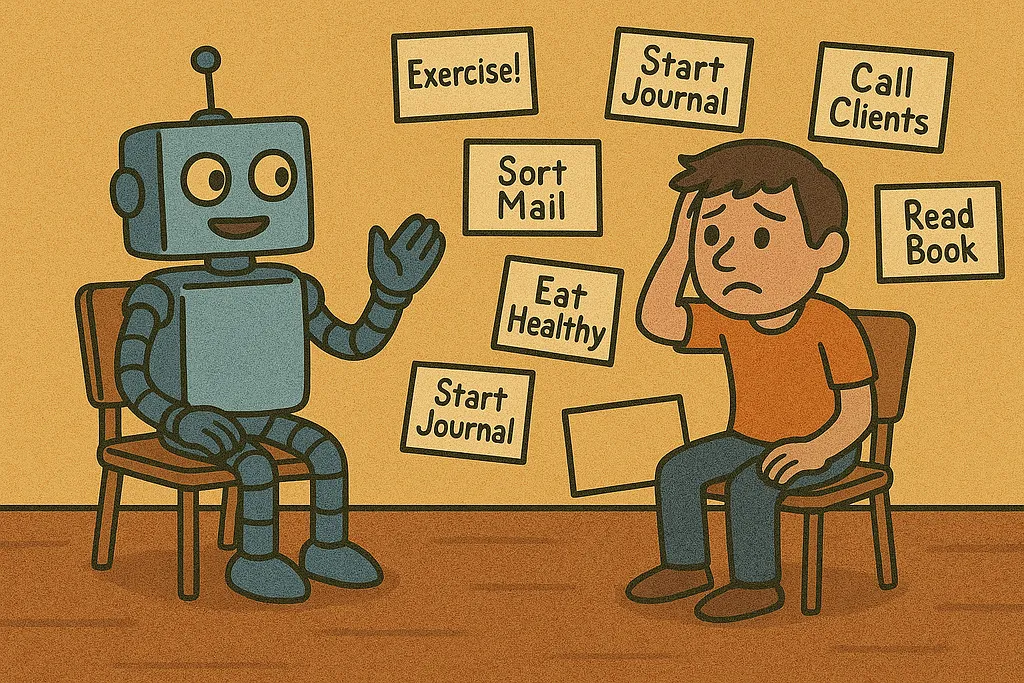
I Asked Claude to Find Every Time I Dropped the Ball (And What We Learned)
August 9, 2025
Here’s a confession: I suspected I was forgetting things. Not just the usual “where did I put my keys” stuff, but systematic project things. Habits I’d planned to adopt but never started. Scripts I’d built but wasn’t using. Processes I’d designed but forgotten to follow.
Building a complex system while documenting everything in session logs creates a unique opportunity: a comprehensive record of every intention, every plan, every “I should really…” moment. But reading through months of your own logs looking for dropped balls? That’s a special kind of masochism.
So I did what any reasonable person building AI tools would do: I asked AI to audit my failures for me.
I knew there were things we had started and not finished, and I especially knew we had often assigned me work (I’ll edit those files after we’re done working today, I’ll update that document in knowledge, etc.) that I had then forgotten to do. But exactly what, and exactly when?
The digital archaeology project
I fed a dedicated a Claude session every log from May through August 2025. Not just the polished summaries — the raw, unfiltered records of daily development work. Every agent conversation, every strategic decision, every “we should implement this routine” that never got mentioned or confirmed as well.
The brief was simple: find every reference to tasks I needed to complete, habits I planned to adopt, or processes I designed but might not be following. Be thorough. Be ruthless. Show me where I dropped the ball.
What came back was simultaneously humbling and illuminating.
The three categories of dropped balls
Category 1: The security debt I keep avoiding
The finding: Multiple sessions referencing authentication implementation, HTTPS setup, rate limiting, and other production-readiness tasks. Status: talked about extensively, implemented barely.
The pattern: I’m great at designing security systems. I’m terrible at prioritizing their implementation when there are shinier features to build.
The wake-up call: Saturday’s user validation readiness assessment showed that security is literally the only structural blocker to production. Everything else works (well, kinda). I just keep treating the thing that matters most like optional homework.
Category 2: The scripts that exist but aren’t used
The finding: 15+ automation scripts created over the months, utilization rate approximately 30%. Including:
- Morning standup automation (built, never integrated into routine)
- GitHub issue generation tools (created, gathering dust)
- Pattern detection utilities (sophisticated, underused)
- Workflow reality checks (comprehensive, occasionally remembered)
The pattern: I love building tools. I’m inconsistent at building the habits that make tools valuable.
The insight: Tools without rhythms are just digital clutter. The gap isn’t technical capability — it’s systematic usage discipline.
Category 3: The rituals that never became rituals
The finding: Elaborate plans for recurring processes that work brilliantly when I remember to do them:
- Weekly Pattern Sweep (designed for Fridays, executed sporadically)
- Morning Standup routine (6am experiment, automated but not integrated)
- Session log archiving (within 24 hours, often delayed)
- Progress reviews and backlog updates (scheduled, irregularly executed)
The pattern: I design excellent processes. I struggle with the human habit-formation layer.
The revelation: Even systematic people need systematic accountability for the systems they create.
The advantage of an AI audit
Having AI review your own process failures creates a unique kind of accountability. It’s not judgmental — just thorough. It doesn’t care about your excuses or good intentions. It just systematically identifies gaps between plans and execution.
What AI caught that I missed:
- Patterns across months that I couldn’t see day-to-day
- The compound effect of small process failure
- Connections between dropped tasks and later problems
- Specific implementation barriers I kept encountering
What AI couldn’t judge:
- Which dropped balls actually mattered
- What environmental factors caused the failures
- Which processes were over-engineered vs. under-executed
- The emotional context around habit formation struggles
The surprising discoveries
The hidden excellence pattern
The audit also revealed positive patterns I hadn’t recognized. Multiple instances of “we built this feature months ago but somehow forgot about it.” The PM-005 feedback system being a perfect example — enterprise-grade implementation with 6 REST endpoints, fully operational, but we never wired it in and forgot all about it.
The insight: Sometimes the problem isn’t dropped balls, it’s dropped confidence in what you’ve already accomplished.
The methodology evolution
Looking across months of logs, the AI identified genuine methodology improvements happening organically:
- Spring Cleaning Sprint protocols that prevented technical debt
- Trust protocols that eliminated false completion claims
- Excellence Flywheel principles that created compound velocity
The pattern: The big systematic improvements weren’t planned — they emerged from responding to real problems with systematic thinking.
The tool creation vs. tool adoption gap
The audit quantified something I suspected: I create tools faster than I integrate them into workflows. Not because the tools are bad, but because tool adoption requires different disciplines than tool creation.
The 30% utilization finding: Most scripts work perfectly when used. The challenge is remembering to use them consistently enough to build automaticity.
What the audit taught us about systematic accountability
1. External perspective reveals patterns invisible to daily experience
When you’re living in the system, you can’t see the system. AI auditing provides the 30,000-foot view that shows recurring patterns across months of work.
2. Implementation barriers are often different than design barriers
I’m good at designing processes. The failures happen at the habit formation layer, not the system design layer. This suggests different solutions: calendar integration, reminder systems, habit stacking rather than better documentation.
3. Accountability systems need accountability systems
Even systematic people need systematic support for maintaining the systems they create. The meta-level discipline of “following the disciplines you’ve designed” is its own skill set.
4. Positive pattern recognition matters as much as failure identification
The audit revealed hidden successes alongside obvious failures. Building systematic confidence in what’s working enables building on existing strengths rather than constantly chasing new solutions.
The practical applications
For individuals building complex projects
Try the AI audit approach:
- Feed session logs or project notes to AI for pattern analysis
- Ask specifically about gaps between intentions and execution
- Look for both failure patterns and unrecognized successes
- Focus on implementation barriers, not just design improvements
For teams with systematic ambitions
Create accountability protocols:
- Regular process audits using external perspective (AI or human)
- Systematic review of “planned but not implemented” initiatives
- Tool utilization analysis alongside tool creation
- Habit formation support for process adoption
For anyone struggling with the systems they’ve created
Recognize the meta-challenge:
- Creating good systems ≠ consistently following good systems
- External accountability reveals patterns internal experience misses
- Implementation discipline is often the bottleneck, not system design
- Positive pattern recognition builds confidence for systematic improvement
The ongoing experiment
Based on the audit, we’re implementing three changes:
- Calendar-enforced rhythms for high-value processes that work when executed
- Tool revival sprint to systematically integrate underused automation
- Weekly accountability reviews to catch dropped balls before they accumulate
The AI audit isn’t a one-time exercise — it’s now part of our systematic approach to systematic approaches.
Today’s meta-learning about building with AI
The most profound insight from this exercise: AI’s greatest value isn’t replacing human judgment, but providing systematic external perspective on human patterns.
We’re building tools that think, but we’re still humans who need support following through on the systems we design. AI accountability isn’t about AI doing the work — it’s about AI helping us see our own patterns clearly enough to address them systematically.
The accountability loop: AI identifies the gaps, humans close them, AI tracks the improvements. Systematic accountability for systematic people building systematic solutions.
Sometimes the best AI assistance is the kind that makes you accountable to yourself.