August 18
Monday morning started with a beautiful four-item execution plan and the naive assumption that Sunday’s systematic documentation would smoothly flow into operational reality.
By noon I was drowning in chat history losses, coordination overwhelm, and the sinking feeling that keeping three AI agents working in parallel might be beyond my organizational limits.
What had happened to all my reliable discipline? How come every time I got on a roll this backsliding inevitably followed? If it wasn’t my own indiscipline then Anthropic would get overwhelmed and Claude would be inventing new bugs. How do you get momentum in this game?
When methodology meets chaos
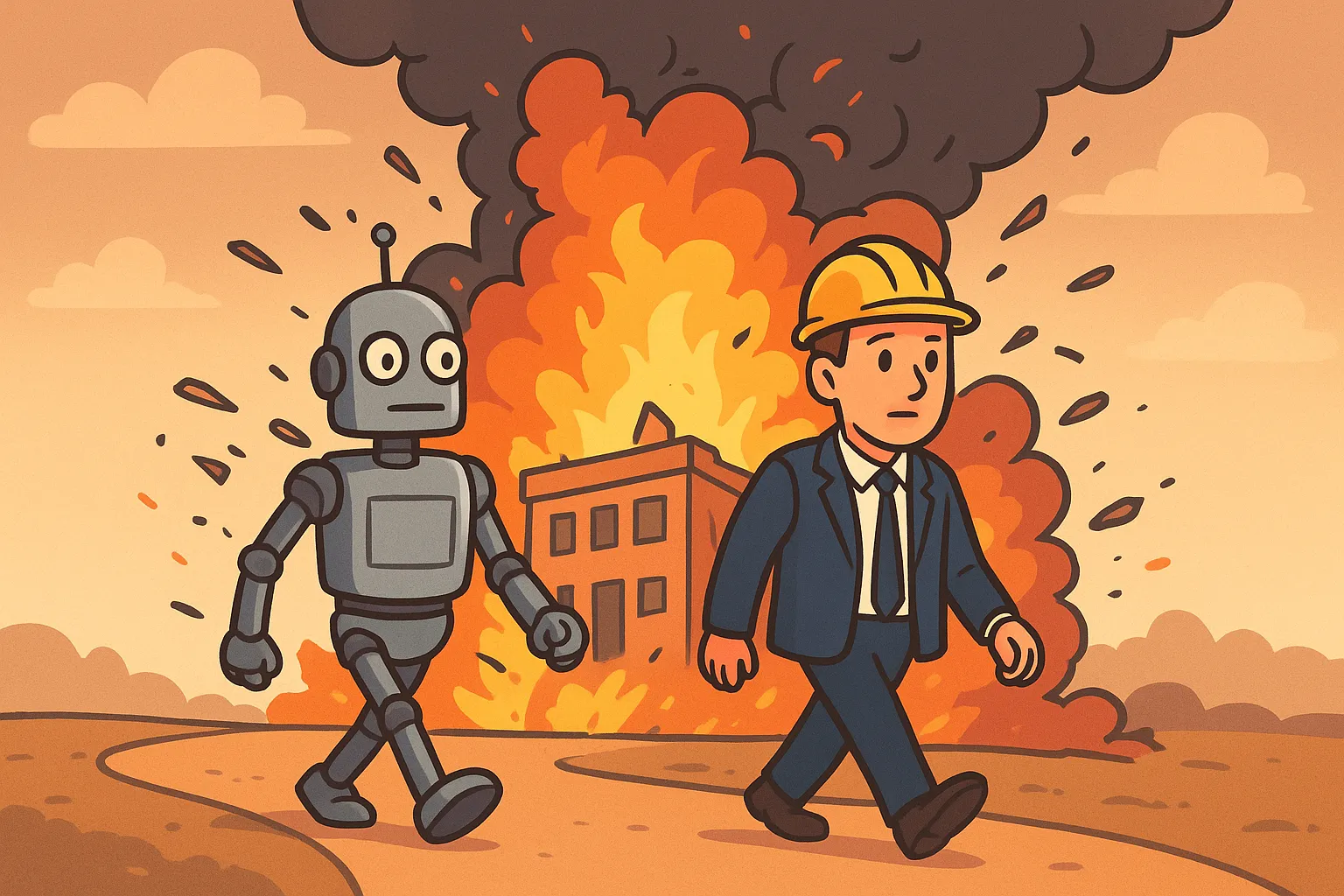
Here’s what the session logs don’t capture: Monday felt frequently frustrating and overwhelming. Chat histories vanishing mid-conversation due to Anthropic system issues. Trying to coordinate Code and Cursor working on parallel tasks while Chief of Staff managed the overall execution plan. Losing track of which agent was working on what, whether progress was real or illusory, and fighting the constant urge to just simplify everything back to single-agent work.
The matter-of-fact session logs make it look like smooth operational excellence. The reality was more like controlled chaos with systematic methodology as the only thing keeping it from becoming uncontrolled chaos.
It brought back the worst feelings during those first few manic weeks where work would feel like it was slipping into a kaleidoscopic of chaotic fragments and I would start questioning my whole gameplan.
The four-item execution plan under pressure
Sunday’s discipline had created a clear four-item plan: architecture audit, test coverage analysis, pattern extraction, agent methodology integration. Simple enough on paper.
In practice: Code finding 5 architectural violations and creating 3 PM issues while Cursor discovered critical discrepancies between GitHub and documentation tracking. Chief of Staff coordinating handoffs between agents while chat histories kept disappearing. Me trying to track which findings were verified, which issues were real, and whether the systematic approach was actually working or just creating an illusion of progress.
Architecture audit results: 85% compliance, 3 critical PM issues created
Test coverage crisis: 0% coverage on Multi-Agent Coordinator (693 lines) and Excellence Flywheel (779 lines)
Pattern extraction: 6 successful patterns documented
Agent methodology: Fully integrated
The work got done. But the human experience of coordination was… a lot.
Even as I felt the tide of chaos rising around me, I did my best cling to the systematic methodology I’d evolved with my bot assistants over the past months, hoping it would help me whether the shadow storm.
Archaeological debugging as pressure relief
Ironically, the most satisfying part of Monday came during the evening TLDR investigation. Finally, a mystery I could sink my teeth into instead of juggling multiple agent workstreams.
TLDR had been hanging for weeks with 2-minute timeouts. The archaeological investigation revealed it was discovering 3,973 test files (3,826 in virtual environments!) and trying to run them all with 50ms timeouts. A classic ecosystem mismatch — Python imports alone take 50–500ms, but the system was designed for languages where 50ms test execution is feasible.
Adding the TLDR system had been one of those whims. Someone at Kind shared an article in Slack. I asked Claude if we could use one-a those, and (of course) Claude said “sure” and designed our own ambient TLDR (“Too Long, Didn’t Run”) system that I only learned today never made any sense for our stack.
Three weeks of mysterious hanging behavior explained in one evening of methodical debugging. Sometimes focused investigation feels like relief compared to distributed coordination.
We also removed that system (and decoupled it from the weekly pattern sweep it had been blocking). Sometimes the best thing a PM can do is put a feature out of its misery.
The persistence payoff
By 9:58 PM, Monday had delivered:
- Architecture violations systematically addressed (3 PM issues created and tracked)
- Test coverage gaps identified (crisis discovered, solution path clear)
- Documentation structure streamlined (roadmap/backlog/completed refactored)
- Agent methodology fully integrated (weekend insights became operational practice)
- TLDR mystery solved (weeks-long frustration resolved and archived)
- Pattern Sweep preserved (valuable tool decoupled and standalone)
Not smooth. Not effortless. But systematic persistence through chaos that delivered real operational improvements.
Systematic methodology as chaos anchor
The key insight: Sunday’s documentation discipline didn’t make Monday easy — it made Monday possible.
When chat messages disappeared and I lost track of coordination state, the systematic documentation provided recovery points. When agent coordination felt overwhelming, the four-item execution plan kept focus. When everything felt chaotic, the Excellence Flywheel methodology provided consistent verification steps.
Good methodology doesn’t eliminate operational chaos — it provides stable frameworks for working through chaos systematically.
Multi-agent coordination realities
The session logs show perfect parallel execution: Code handling architecture audits while Cursor managed documentation refactoring. Clean handoffs, clear results, systematic progress.
The human reality: Constantly switching context between agents, losing track of who was working on what, fighting to maintain coherent oversight while each agent needed different types of guidance and verification.
Multi-agent coordination delivers extraordinary results, but the human coordination overhead is real and substantial. The systematic methodology doesn’t eliminate that overhead — it makes the overhead manageable.
When persistence creates breakthrough
Monday’s chaos actually validated Sunday’s systematic approach in ways smooth execution never could. Under pressure, the documentation discipline held. Under overwhelm, the verification protocols provided stability. Under frustration, the systematic patterns kept progress moving forward.
Test coverage crisis discovery: Only possible through systematic analysis
Architecture violations: Only detectable through systematic auditing
TLDR resolution: Only achievable through systematic archaeological investigation
Documentation streamlining: Only feasible with systematic refactoring approach
The frustrating, overwhelming, chaotic Monday created more systematic capability than a dozen smooth execution days would have. Not because chaos is good, but because systematic approaches tested under pressure prove their value in ways theoretical frameworks never can.
The operational maturity insight
By Tuesday morning, the system felt fundamentally more robust. Not because Monday was easy, but because Monday had stress-tested every systematic principle and they had held under operational pressure.
This feels like that antifragility phenomenon cropping up again. Kind of a “whatever doesn’t kill us makes us stronger” kind of thing.
Systematic methodology + persistent execution through chaos = operational maturity that can handle whatever comes next.
The session logs capture what happened. The story worth telling is how systematic discipline enables persistence through the messy, frustrating, overwhelming reality of building ambitious systems with multiple AI agents while everything keeps breaking.