The Calendar That Wasn’t Mine

January 28, 2026
Tuesday afternoon. I’m testing the alpha release with a fresh account. I am in hurry to test certain things so I give my API key for an LLM and skip connecting my Notion, Slack, and Google Calendar to this account.
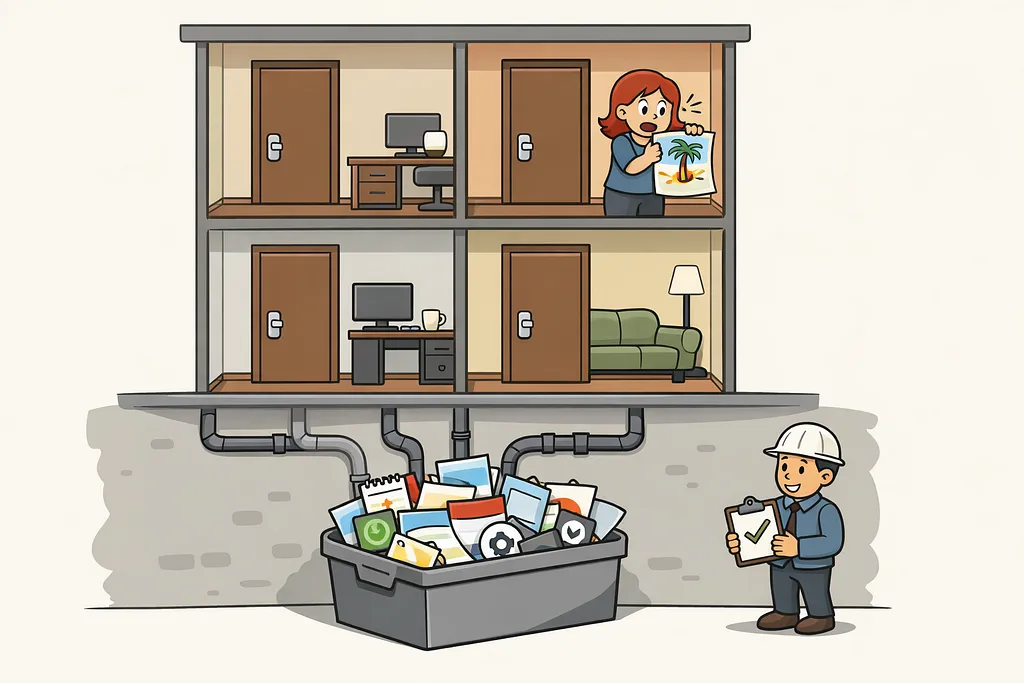
Then I greet Piper and they run down my appointments for the day! This is a user without my credentials seeing my calendar! This is a major security issue for any product intend to serve multiple users.
The leak
Multi-tenancy is supposed to mean isolation. User A’s data stays with User A. User B’s data stays with User B. The walls between accounts are supposed to be absolute.
The walls weren’t there. Or rather — they were there for some things and not others. User accounts existed. Login worked correctly. The database had owner_id columns on most tables. It looked multi-tenant. It felt multi-tenant.
But the calendar integration stored OAuth tokens globally. When I connected my calendar, the system saved my Google credentials. When the next user came along, the system retrieved… my credentials. Because they were the only credentials there. No user scoping. No isolation. Just a global token bucket.
One user’s calendar. Showing in another user’s account. The leak was complete.
The archaeology
This wasn’t a new bug. This was an old assumption, finally visible.
Back in October 2025, we’d added multi-user support. The commit looked comprehensive — user accounts, authentication, owner_id foreign keys on the main tables. The PR passed review. The tests passed. Multi-user: done.
Except the integration layer never got updated. It must have been aj oversight in the plan that got past me. Calendar tokens, Slack credentials, GitHub connections — all the external service authentication still used global storage. The October commit updated the core, but the edges remained single-tenant.
Eight months of development on top of that foundation. Features built, bugs fixed, patterns established — all assuming the multi-user support was complete. It wasn’t. The calendar leak proved it.
The scope of the problem
Once we knew what to look for, we found it everywhere.
Calendar tokens: global. Slack tokens: global. GitHub tokens: global. Notion tokens: global. Every external integration stored credentials without user context.
This is why I audit things when I find a problem. It’s rarely a one-off!
And it wasn’t just tokens. The projects table had a unique constraint on name — globally unique, not per-user unique. Two users couldn't both have a project called "Q1 Planning." The constraint would reject the second one. Data isolation failure of a different kind.
The API key storage used a global prefix. The config services didn’t require user context. The OAuth callbacks didn’t verify which user initiated the flow.
We’d built multi-user authentication on top of single-user infrastructure. The login was isolated. Everything behind it wasn’t.
The fix that couldn’t be incremental
My Lead Developer proposed a phased approach: update each integration one at a time, make user_id optional at first, gradually require it everywhere. Safe. Incremental. Low risk.
This is the type of advice you get from LLMs trained on best practices, but every time I get this type of advice I remind them that we do not have any real users yet. We are not in production. We are in alpha. There is no value to a phased approach and much risk of not foinishing.
My Chief Architect agreed: make user_id required from the start.
The reasoning: optional parameters create hiding places. If user_id is optional, code paths that don't provide it will continue to work. They shouldn't work — they're the exact paths that leak data — but they will. The migration "completes" with gaps still hidden.
Required parameters create a forcing function. Every code path that lacks user context fails immediately. The failures tell you exactly where to look. No hiding. No gradual drift. No “we’ll get to that later.”
We made user_id required from Phase 1.
Nine phases
The fix touched everything.
Phase 1: Repositories require owner_id. No more optional user context. Every database operation scoped to a specific user.
Phase 2: OAuth investigation. Map every token storage and retrieval path. Find every place credentials flow without user context.
Phase 3: RequestContext enforcement. Every authenticated request carries user identity. Middleware validates it. No anonymous operations on protected resources.
Phase 4: Repository isolation tests. Eighteen new tests verifying that User A cannot access User B’s data through any repository method.
Phase 5: OAuth state redesign. The OAuth callback now embeds user_id in the state parameter. When Google redirects back, we know which user initiated the flow.
Phase 6: Credential storage separation. IntegrationConfigService for app-level credentials. UserTokenService for user-specific tokens. Clear separation, clear ownership.
Phase 7: Config service signatures. Every method that touches user data requires user_id as a parameter. No more inferring. No more globals.
Phase 8: Singleton manager refactor. The conversation managers, the onboarding managers — all the stateful services now explicitly track which user they’re serving.
Phase 9: Workspace activation. The workspace_id concept that had been designed but dormant, finally wired in as the future path for team isolation.
94 new tests. ADR-058 documenting every decision. One day of execution.
What the forcing function revealed
The Architect and I were right. Making user_id required immediately surfaced gaps we wouldn't have found otherwise.
- A webhook handler that processed Slack events without checking which user’s Slack connection triggered them.
- An OAuth callback that stored tokens before verifying the user session.
- A config lookup that fell back to global defaults when user-specific values weren’t found.
Each failure was a discovery. Each discovery was a fix. By the end of the day, the system was genuinely isolated — not “mostly isolated” or “isolated except for edge cases.” Every code path either handled user context explicitly or had been deliberately designed for system-level operations.
The October lesson
The October 2025 commit wasn’t wrong. Adding user accounts, authentication, and owner_id columns was necessary work. The mistake was assuming it was complete.
Multi-tenancy isn’t a feature you add. It’s a property that must hold everywhere. One leaky integration undermines the entire model. One global token bucket means the walls don’t exist.
The October commit added the structure. The January fix ensured the property. Eight months between them — eight months where the system looked multi-tenant but wasn’t.
The calendar now
I tested again after the fix. Fresh account, again skipped connecting a calendar. New bug: now Piper told me I have no events coming up (when really it should admit it doesn’t know my schedule). We opened up two new issues: one for failing gracefully now, and a later plan for Piper to offer to attach your calendar if it isn’t added yet (but not to keep offering if you refuse).
The walls exist now. 94 tests verify they hold. ADR-058 documents why they’re built this way. The forcing function ensured we found every gap.
One day of aggressive fixing. Eight months of hidden assumptions surfaced. User A’s calendar stays with User A.
That’s what multi-tenancy actually means.