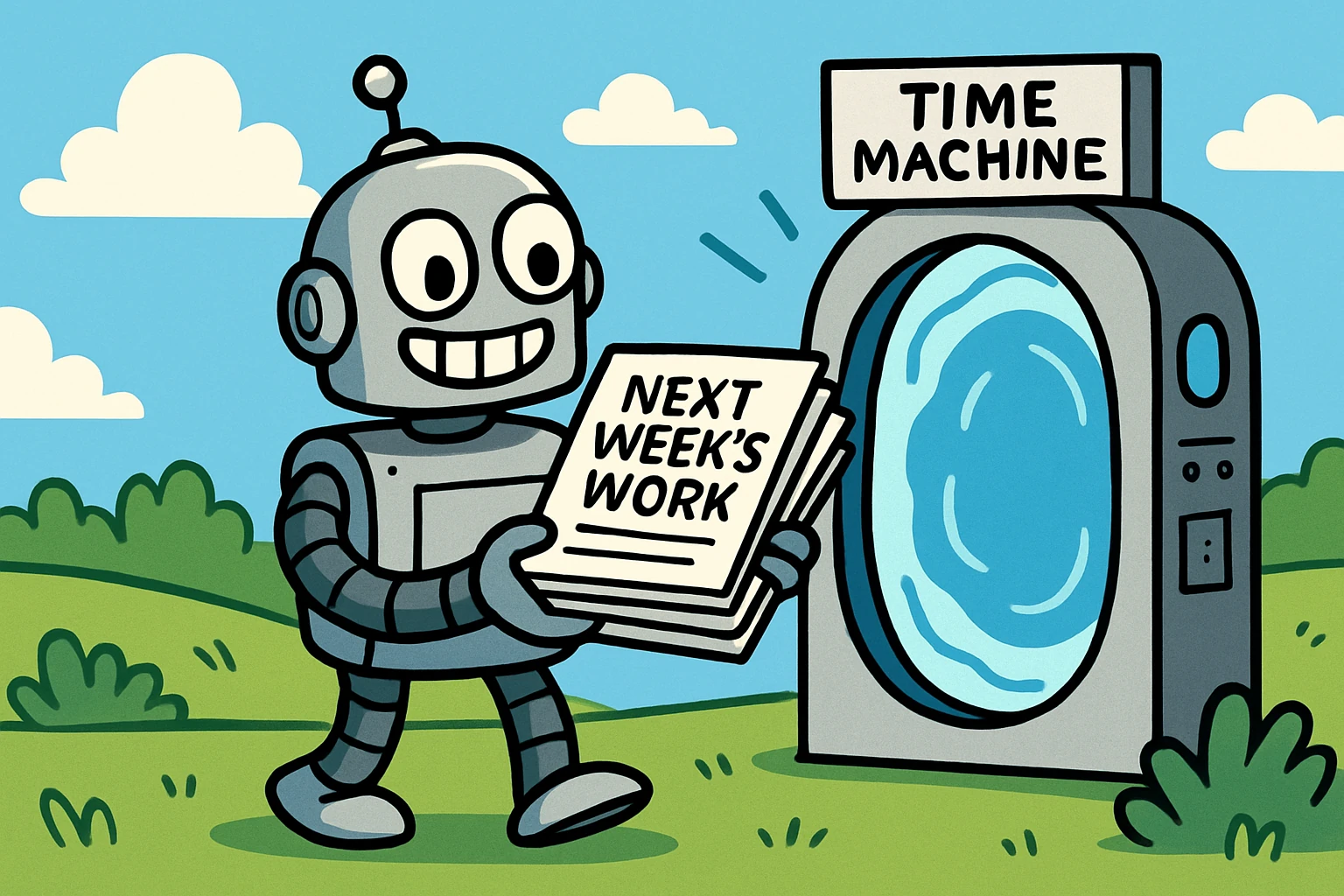
The Day We Finished Next Week’s Work in One Day
July 22
It was 10:54 AM and I was looking at our Foundation Sprint Day 2 plan: complete PM-055 (Python version consistency) by Wednesday, maybe start on PM-015 Group 4 if we had time. Systematic approach, no rushing, proper documentation.
By 4:15 PM, we’d not only finished PM-055 a full day early, but also eliminated 95% of our test infrastructure problems, synchronized seven GitHub issues, created comprehensive CI/CD workflows, and proven that multi-agent development coordination actually works at scale.
This is the story of what happens when systematic preparation meets perfect execution — and why the best way to go fast is sometimes to fix everything first.
Systematic meets ambitious
Our Foundation Sprint wasn’t about adding features. It was about eliminating the kind of technical debt that makes everything else slower: flaky tests, environment inconsistencies, outdated documentation, manual processes that should be automated.
PM-055 alone was a comprehensive undertaking — standardizing Python 3.11 across development, Docker, CI/CD, and production environments. Originally planned for a full day Wednesday. But we’d done our homework: dependency compatibility verified, migration paths documented, rollback strategies prepared.
By the way, every time I say “we accomplished” here, I mean this was happening through coordination with three AI assistants — Claude Sonnet as lead developer, Claude Code for implementation, and Cursor for configuration and testing. But the systematic approach that made it all work came from months of learning when ad-hoc development creates more problems than it solves.
The multi-agent orchestra in action
The breakthrough moment was watching perfect parallel execution emerge organically. While Code was implementing Python 3.11 Docker configurations, Cursor was simultaneously investigating database session issues. While one agent created CI/CD workflows, another was updating documentation.
Traditional approach: One task at a time, sequential handoffs, context loss between phases
Systematic orchestration: Parallel workstreams with clear interfaces and coordination protocols
The key insight was treating each AI assistant as a specialized team member rather than a general-purpose tool. Code excelled at complex implementation and testing. Cursor mastered configuration files and systematic debugging. Sonnet provided architectural oversight and coordination.
The 95% improvement moment
The most dramatic demonstration of systematic problem-solving came during Cursor’s database session investigation. We’d been living with flaky tests — 42 failures in the full suite, but individual tests passing.
Classic “it works on my machine” syndrome.
Rather than patch symptoms, Cursor took a systematic approach: pattern analysis, root cause identification, targeted fixes with verification. The result? 42 failed tests → 2 failed tests in 95 minutes.
Root cause: AsyncPG connection pool contention (single connection, multiple concurrent operations)
Fix: Connection pool optimization + transaction management improvements
Impact: 95% reliability improvement across the entire test suite
This wasn’t just debugging — it was infrastructure multiplication. Every future development session would benefit from reliable tests instead of fighting environmental issues.
The documentation reality alignment breakthrough
One unexpected discovery was how far our project documentation had drifted from reality. Our roadmap still showed completed features as “not started,” making strategic planning impossible.
The problem: Documentation described the system we’d planned to build six weeks ago
The reality: We’d built something significantly more sophisticated and needed docs to match
Cursor systematically reconciled roadmap.md and backlog.md with actual development progress, moving eight completed items from “in progress” to “complete” and updating status from June 19 to July 22.
This alignment wasn’t just administrative — it enabled accurate strategic planning and proper stakeholder communication about current capabilities.
In many ways this entire process has involved me slowly recognizing the importance of documentation and increasing my rigor and discipline about capturing the current state of things at all times.
The compound acceleration principle
What struck me about Foundation Sprint Day 2 was how systematically addressing infrastructure debt created compound acceleration rather than slowing us down.
Python 3.11 standardization → Modern async features available → Better performance and debugging
Test reliability improvements → Confident refactoring → Faster feature development
Documentation alignment → Accurate planning → Better resource allocation
Each fix enabled the next improvement, creating an acceleration cascade rather than the usual “choose between speed and quality” tradeoff.
The perfect parallel-execution pattern
The most impressive coordination moment was Code and Cursor completing different aspects of PM-055 simultaneously at 3:40 PM. Code finished comprehensive documentation updates while Cursor completed database infrastructure improvements.
Code’s final status: “Documentation Mission COMPLETE by a nose!”
Cursor’s breakthrough: “95% IMPROVEMENT: 42 failed tests → 2 failed tests!”
These little guys get so enthusiastic sometimes!
No conflicts, maximum value creation, perfect timing for the afternoon strategic planning session. This is what systematic coordination looks like when it works.
Systematic vs. chaotic development
What this day demonstrated was the difference between systematic and chaotic approaches to complex initiatives:
Chaotic development: Rush to implement features, deal with problems when they arise, accumulate technical debt
Systematic development: Invest in foundation quality, create reliable processes, accelerate through better infrastructure
Look, chaos is my natural state. When it’s working I call it “flow,” but the truth is… well, just take a look at my desk right now. But you can’t operate and sustain a successful long-term project from a chaos posture, no matter what the inside of your head looks like, which is a big reason why I’ve adopted and become facile with so many assistive crutches over the years.
The paradox is that systematic approaches often feel slower initially but deliver results faster overall. Spending time on Python environment consistency prevented weeks of “it works in development but not production” debugging. It’s like the Navy Seals supposedly say: “Slow is smooth, and smooth is fast.”
The “finish next week’s work today” methodology
How do you complete work planned for next Wednesday on Tuesday? The secret isn’t working faster — it’s working on the right things in the right order:
Preparation phase: Dependency analysis, compatibility verification, rollback planning
Coordination phase: Clear agent responsibilities, parallel workstreams, systematic handoffs
Execution phase: Focused implementation with continuous validation
Integration phase: Comprehensive testing and documentation alignment
Each phase enables the next one to go faster. Good preparation makes execution look effortless.
The test-infrastructure multiplication effect
The database session debugging session perfectly illustrated how infrastructure work multiplies team productivity. Instead of every developer fighting flaky tests individually, one systematic fix improved the experience for everyone.
Before: 11% test failure rate, unreliable CI/CD, time lost to environmental debugging
After: 0.5% test failure rate, reliable automation, confidence in test results
This is why the best developers often spend time on “invisible” infrastructure work — the productivity gains compound across the entire team.
Documentation-driven development
One discovery from this systematic approach was treating documentation as a forcing function for clear thinking rather than an afterthought:
Traditional: Build features, document them later (maybe)
Systematic: Document intentions, implement to match documentation, validate alignment
In fact, I am starting to think that a documentation-first UX approach (write docs as if the experience is actually good, then use TDD to “discover” the gap and fix it) might be really useful with these bots.
When Code created comprehensive Python 3.11 setup guides before implementing the environment changes, it forced us to think through edge cases and user experience before writing code.
The GitHub-first coordination protocol
A key enabler of multi-agent coordination was treating GitHub issues as the authoritative source of truth rather than chat conversations:
Issue creation: Clear scope and success criteria
Progress tracking: Real-time updates visible to all agents
Completion verification: Linked to actual code changes and documentation
This prevented the usual coordination problems where different team members have different understandings of what’s been completed.
The chief architect consultation readiness
The systematic approach paid off when it came time for strategic consultation. (There is a fourth Claude instance in the mix, an Opus chat whose role is my Chief Architect).
Instead of “we made some progress but documentation is messy,” we could present:
- Clean GitHub state: All issues properly tracked and up-to-date
- Accurate documentation: Roadmap and backlog reflecting current reality
- Quantified achievements: Specific metrics and completion dates
- Clear options: Multiple well-documented paths for Week 2
Good process creates good information, which enables good decisions.
The multi-agent coordination lessons
What I learned about AI team coordination from this day:
Specialization works: Assign agents based on their strengths rather than using them interchangeably
Parallel execution requires coordination: Clear interfaces and handoff protocols prevent conflicts
Systematic preparation enables speed: Time invested in planning and setup pays dividends during execution
Documentation amplifies coordination: Shared context prevents miscommunication and drift
The human role evolved from “doing everything” to “orchestrating systematic execution.”
The foundation sprint philosophy validation
This day validated the core Foundation Sprint philosophy: fix the foundation, accelerate everything else.
Instead of rushing to add features while fighting technical debt, we systematically eliminated the friction that slows down all future development. The result was faster progress on the work that matters.
Technical debt elimination isn’t a luxury for “when we have time” — it’s an acceleration strategy that pays for itself through increased velocity on everything that follows.
The compound benefits realization
By evening, we could see the compound benefits of systematic infrastructure work:
Immediate benefits: Python 3.11 features, reliable tests, accurate documentation (not constantly recreating the environment and re-downloading the correct versions of things)
Medium-term benefits: Faster development cycles, confident refactoring, better onboarding
Long-term benefits: Scalable processes, proven coordination patterns, institutional knowledge
The day’s work created value that will multiply across every future development session.
Discovering a replicable methodology
Perhaps the most valuable outcome was discovering that this systematic approach is replicable. The coordination patterns, preparation strategies, and execution phases can be applied to future complex initiatives.
Phase-based planning: Preparation → Coordination → Execution → Integration
Agent specialization: Match tasks to strengths
Documentation-driven development: Clear intentions enable better implementation
GitHub-first coordination: Authoritative tracking prevents confusion
(Spoiler: Six weeks later we are still paying for not consistently keeping accurate tracking records in GitHub but that’s another story.)
We’d created a methodology for systematic development that works at scale.
The strategic positioning outcome
The most important result wasn’t any individual feature completion — it was the strategic positioning for Week 2. By finishing Foundation Sprint objectives early with systematic excellence, we created multiple acceleration opportunities:
- Technical readiness: Reliable infrastructure supports ambitious features
- Process maturity: Proven coordination patterns enable complex initiatives
- Information clarity: Accurate documentation enables optimal resource allocation
- Team confidence: Systematic success creates momentum for bigger challenges (even when the team is just you and a bunch of cheerful bots)
Sometimes the best way to go fast next week is to fix everything this week.