December 11–15, 2025
Thursday morning, December 11th, 6:32 AM. Time to release v0.8.2 to production.
The version bump itself was straightforward. We’d been running 0.8.1.3, accumulating changes through the integration marathon and the systematic work that followed. Twenty-one commits sat on the production branch waiting to merge. The GUI setup wizard was complete. The smoke test suite was production-ready. Everything worked for actual alpha testers now.
So we bumped to 0.8.2. Merged production into main, committed the version change and release notes, pushed to origin, merged main back to production. Both branches synchronized at the same commit. Pre-push hooks validated everything. Production deployed cleanly.
By 7 AM, v0.8.2 was running.
The release orchestration
But releasing software isn’t just pushing commits. It’s updating documentation so it reflects reality. Making sure every file that mentions a version number gets updated. Ensuring the quickstart guide matches what users will actually experience. Documenting what changed and why it matters.
Four agents worked in parallel on the release. Code handled the deployment itself — branch management, version bumping, release notes creation. Document Manager continued consolidating the omnibus logs from the previous week’s work. Executive started the Weekly Ship preparation, reviewing what had shipped and what it meant. Communications analyzed the narrative arc we’d been living through, looking for the story worth telling.
Six documentation files needed updates for version consistency. Alpha Quickstart, Alpha Testing Guide, email template for onboarding new testers. The known issues list got a status update: from “Production Ready” to “Stable Core — Setup/Login/Chat Ready, Focus Testing on Workflows.” The alpha agreement gained an encryption disclaimer, making explicit what was secure and what wasn’t yet.
By 9 AM, all documentation matched the deployed reality. Version numbers consistent, time estimates updated, feature descriptions accurate. Anyone joining alpha testing would see coherent, current information.
The release itself was unremarkable in the best way. No drama, no last-minute issues, no “oh wait we forgot…” moments. Just systematic execution of a checklist, coordinated across four parallel workstreams, completed in about three hours.
Permission to stop
Friday I had an album release party. I’d started writing songs about five years ago and had gone into the studio once a month for more than two years running to record these songs. The album dropped this summer and it took until December to coordinate the party, rehearse the band, and put on the show.
As exciting as it has been to get Piper Morgan to this critical alpha-testing plateau, it just had to take a back seat for a moment to my passion project.
The timing wasn’t planned. You don’t schedule album releases around software milestones. But they converged anyway, and that convergence created something important: permission to actually stop working on Piper for a few days.
I’d been working on this project essentially nonstop since late May. Seven months of sustained effort. Not every day, not every hour, but the mental space it occupied was constant. Even rest days involved thinking about next steps, mentally drafting plans, staying close to the work.
Friday through Sunday, I let that go. Completely. First time since the project began in earnest.
This is a strange thing when you’re accountable only to yourself. There’s no boss saying “take the weekend off.” No team that needs you to rest so you don’t burn out and leave them stranded. No external pressure to maintain sustainable pace. Just you, your project, and the question of when enough is enough for now.
The milestone helped. v0.8.2 in production meant we’d reached a meaningful waypoint. Alpha testers could use the system. The core functionality worked. We weren’t in crisis. There was no P0 bug blocking everything, no integration gap making the system unusable. Just normal ongoing work — polish, iteration, the next set of features.
That stability created space to step away without guilt. Not abandoning the project, not losing momentum, just… pausing. Taking the first proper break since this whole thing started.
It was a little scary! Part of me wonders if everything will go poof! if I look away for too long.
The return
Monday evening, 5:40 PM, I opened my laptop and picked up exactly where I’d left off.
The Executive session from Thursday had paused mid-stream, two of six workstreams reviewed for the Weekly Ship. We’d stopped after Engineering & Architecture, still needing to cover Methodology, Governance, External Relations, and Learning.
So I just continued. Loaded the context, reviewed what we’d already covered, moved into Methodology workstream review. Fifty-five minutes later, all six workstreams were documented, the Weekly Ship draft was complete — 3,000 words synthesizing the previous week’s work — and we had a clear picture of where every part of the project stood.
No ramp-up time. Surprisingly little “what was I doing again?” No loss of momentum or context. Just continuation.
This surprised me slightly. I’d expected more friction in resuming after three full days away. But the break had been complete enough that coming back felt fresh rather than fragmented. And the documentation we’d built — omnibus logs, session logs, Weekly Ships — meant I didn’t have to hold everything in my head during the break. It was all there, ready to load back in.
What sustainability means
The break itself wasn’t the point. The point was learning that breaks are possible without losing the thread.
For seven months, I’d been operating under an implicit assumption: constant pressure creates momentum, stepping away means starting over. This served a purpose early on — you need that intensity to get something from zero to real. You need sustained focus to build enough that momentum becomes self-sustaining.
But somewhere in those seven months, we’d crossed a threshold. The project had enough structure, enough documentation, enough systematic process that it could survive me stopping for a few days. Better than survive — it could wait without degrading.
The production milestone proved the system worked. The three-day break proved the process worked. We’d built something that didn’t require constant heroic effort to maintain forward progress.
This matters for solo founders in a particular way. You don’t have a team that forces you to think about sustainability. No one’s going to burn out except you. No one’s going to point out that the pace isn’t maintainable except your own body eventually saying “no more.”
So you have to build sustainability deliberately. Not because external factors force it, but because the alternative is building something that only works when you’re in a constant state of crisis intensity.
The week before the break, we’d discovered what systematic building looks like — consolidation, refactoring, epic completion through preparatory work rather than heroic effort. The break itself taught something complementary: systematic building doesn’t just mean how you work, it means how you rest.
Stopping completely. Not checking in, not “just quickly,” not keeping one eye on things. Actually stopping. Then coming back to find everything exactly where you left it, documented and waiting, ready to continue.
The rhythm ahead
By Tuesday morning, the pattern was clear. We’d moved from crisis mode (integration marathon, urgent debugging) through systematic execution (the week after) to milestone achievement (v0.8.2 release) to earned rest (three days completely away) to resumption (picking up the thread exactly where it was left).
That’s a sustainable rhythm. Not “sprint forever until you collapse.” Not “maintain constant intensity through sheer will.” But: build systematically, reach waypoints, pause meaningfully, resume without friction.
At the same time my manic pace of publishing has slowed down. I’ve stockpiled quite a few insights posts but I no longer feel like there is a dramatic story happening Every Single Day and I am much more comfortable finding a story in a three- or four-day work arc now. Nobody is begging to be deluged by posts, and attrition from newsletter subscribers is way down, as the number of net subscribers continues to grow alongside the slower publishung pace.
The work itself was adapting. Not disappearing, not slowing down in terms of actual output, but changing character. From frenetic to deliberate. From reactive to systematic. From “must ship everything immediately” to “what’s the right next thing to build?”
Alpha testing with real external users changed the calculus. We weren’t building in a vacuum anymore. Real humans were onboarding and alpha testers (still mostly me in test accounts) were actually using the system, finding bugs, requesting features, validating what worked. That external feedback created natural pacing — we needed time to process their input, to distinguish signal from noise, to make good decisions rather than fast ones.
The methodology work was maturing too. Patterns like “Green Tests, Red User” and “75% Complete” emerged from practice and got documented. The six-workstream reorganization clarified ownership and scope. The next pattern sweep was scheduled for Friday, continuing the practice of capturing what we were learning about how to work well.
We’d reached a place where the project could sustain itself without constant crisis energy. Not because the work was easy or complete, but because the infrastructure — technical, processual, organizational — was robust enough to support normal human rhythms.
Building for distance
Eight months in, with the first external alpha testers using the system, with v0.8.2 in production, with systematic processes that survive three-day breaks — the project had reached a different kind of maturity.
Not feature completeness. Not “we’re done.” But operational maturity. The kind where you can work sustainably because the foundation holds. Where you can stop without losing momentum because the documentation captures state. Where you can return without friction because the processes are clear.
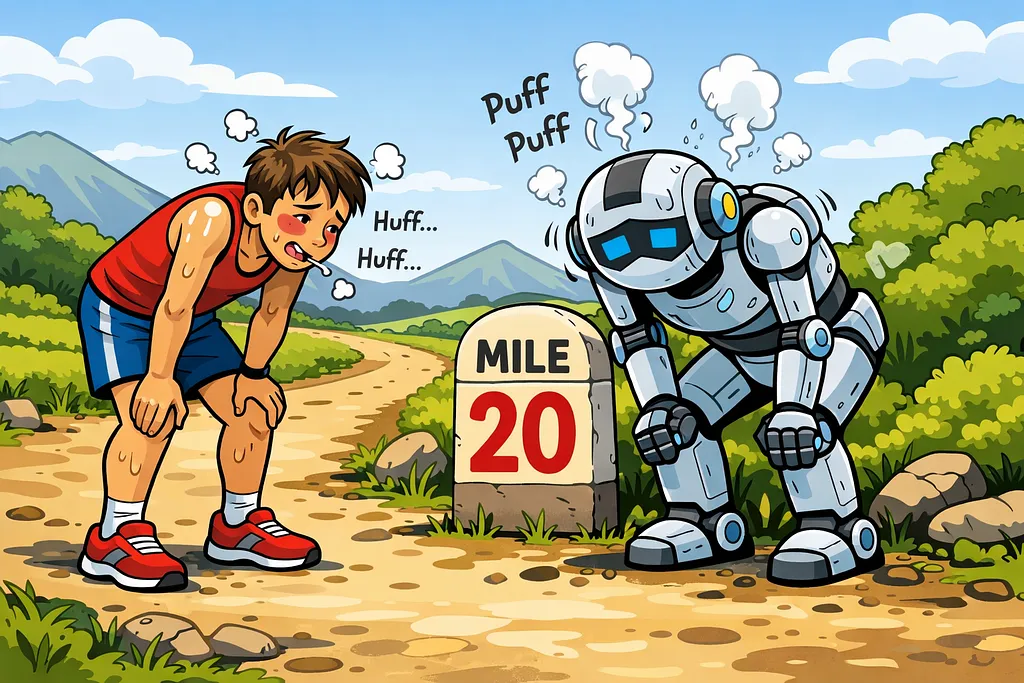
This is what it means to build for distance rather than speed. You can sprint at the beginning — you probably should sprint at the beginning, to build enough momentum to keep going. But distance running requires a different strategy. Sustainable pace. Regular rest. Trust that the infrastructure you’ve built will carry the work through gaps in constant attention.
The milestone pause taught that lesson. v0.8.2 represented eight months of building. The three-day break represented learning to trust what we’d built. Monday evening’s resumption represented proving that trust was justified.
The systematic work continues. The epic completions continue. The pattern recognition and methodology evolution continue. But now they continue at a pace that’s maintainable, sustainable, human.
Because the goal isn’t to build Piper Morgan as fast as possible through heroic effort that inevitably breaks. The goal is to build Piper Morgan as well as possible through systematic work that’s still sustainable when the project is two years old, five years old, ten years old.
The milestone proved we could reach production. The pause proved we could maintain it. That combination opens up possibilities that pure intensity never could.
The work continues. Just at a rhythm that can last.