The Puzzle Pieces Finally Click: How to Tell If You’re Building Tools or Just Collecting Code
August 20
It was a Wednesday morning, and I was watching my agents work in parallel — Code doing systematic testing infrastructure, Cursor researching persistent context patterns — when it hit me.
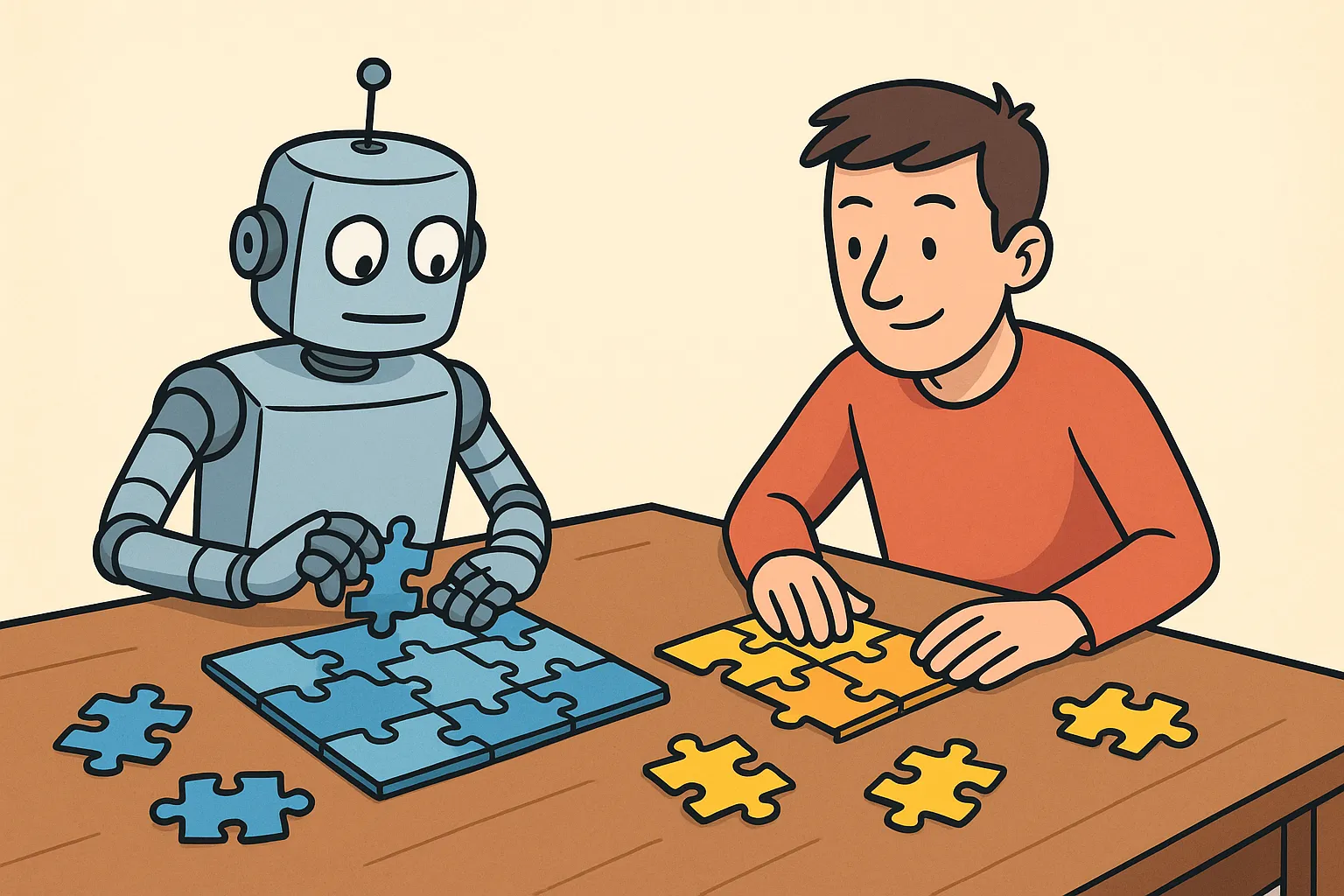
“We’re building puzzle pieces but not connecting them.”
It’s one of those observations that feels obvious once you say it out loud, but somehow you’ve been living in the before-state for months without noticing. We had this sophisticated Multi-Agent Coordinator infrastructure. We had comprehensive test coverage (599+ smoke tests!). We had Excellence Flywheel methodology documentation. We had all these carefully built components.
But we were still manually deploying agents and manually running tests and manually applying methodology.
You know that feeling when you realize you’ve been opening cans with a knife while a can opener sits in the drawer right next to you?
The archaeological discovery
The day turned into accidental infrastructure archaeology. My Code agent was investigating why some documentation links worked while others failed, and discovered something embarrassing: 47 untracked files just sitting in the repository. Not broken files — perfectly organized files that had never been committed to git.
ADR documents. Methodology guides. Session logs. Favicon assets. All the institutional memory we’d been carefully creating, just… not actually tracked anywhere.
It’s like finding out you’ve been writing detailed notes and leaving them in different notebooks around the house instead of putting them in the filing system.
But the bigger discovery was about the Multi-Agent Coordinator itself. After nearly an hour of trying to figure out why the markdown documents at pmorgan.tech weren’t rendering properly, I converted the mult-agent coordinator guide one of the LLMs had written for me manually to HTML just so I could read it myself (finally), trying to understand whether it was development infrastructure or product functionality.
The meta-irony was perfect: using manual workarounds to read documentation about automated coordination while my agents debugged why automated coordination deployment wasn’t working.
When methodology meets reality
Here’s where the Excellence Flywheel methodology proved its worth, though. Instead of just building more things, we applied systematic verification first.
What we thought we had: 0% test coverage on critical orchestration components
What we actually discovered: 94% method coverage on Multi-Agent Coordinator, 943 lines of Excellence Flywheel tests
What we thought we had: Missing infrastructure for rapid feedback
What we actually discovered: Smoke tests that ran in effectively 0 seconds (vs our <5 second target)
The methodology forced us to verify before building, which meant discovering we’d already built most of what we needed. We just hadn’t connected the pieces.
The compound acceleration moment
Once we started connecting pieces instead of building new ones, something interesting happened. Tasks that Claude Opus had estimated at 4 hours completed in 25 minutes. Not because we cut corners, but because we were leveraging existing infrastructure instead of rebuilding from scratch.
The persistent context foundation that was supposed to be a marathon session? Turned into 1,500+ lines of production-ready code with comprehensive tests, delivered faster than we could have written the initial planning document.
It’s the difference between building a house by making your own nails versus using the toolbox you already have. Both approaches can work, but one scales exponentially better.
The Excellence Flywheel methodology we’d been applying manually started working systematically. Test-driven development using activated test infrastructure. Systematic verification using our coordination patterns. GitHub-first tracking with automated processes.
Puzzle pieces on steroids
Building in isolation creates impressive technical debt, even when each piece is well-crafted. You end up with sophisticated components that don’t compound — they just accumulate.
The breakthrough isn’t building better pieces. It’s building systems where pieces amplify each other.
Our smoke tests now run continuously. Our documentation deploys automatically. Our methodology gets applied systematically rather than manually. Each piece makes the others more powerful.
It turns out the difference between building tools and collecting code is whether the tools actually make the next tool easier to build.
Wednesday felt like the day we stopped being sophisticated code collectors and started being systematic tool builders. The puzzle pieces were always there — we just needed to learn how to make them click.