September 14
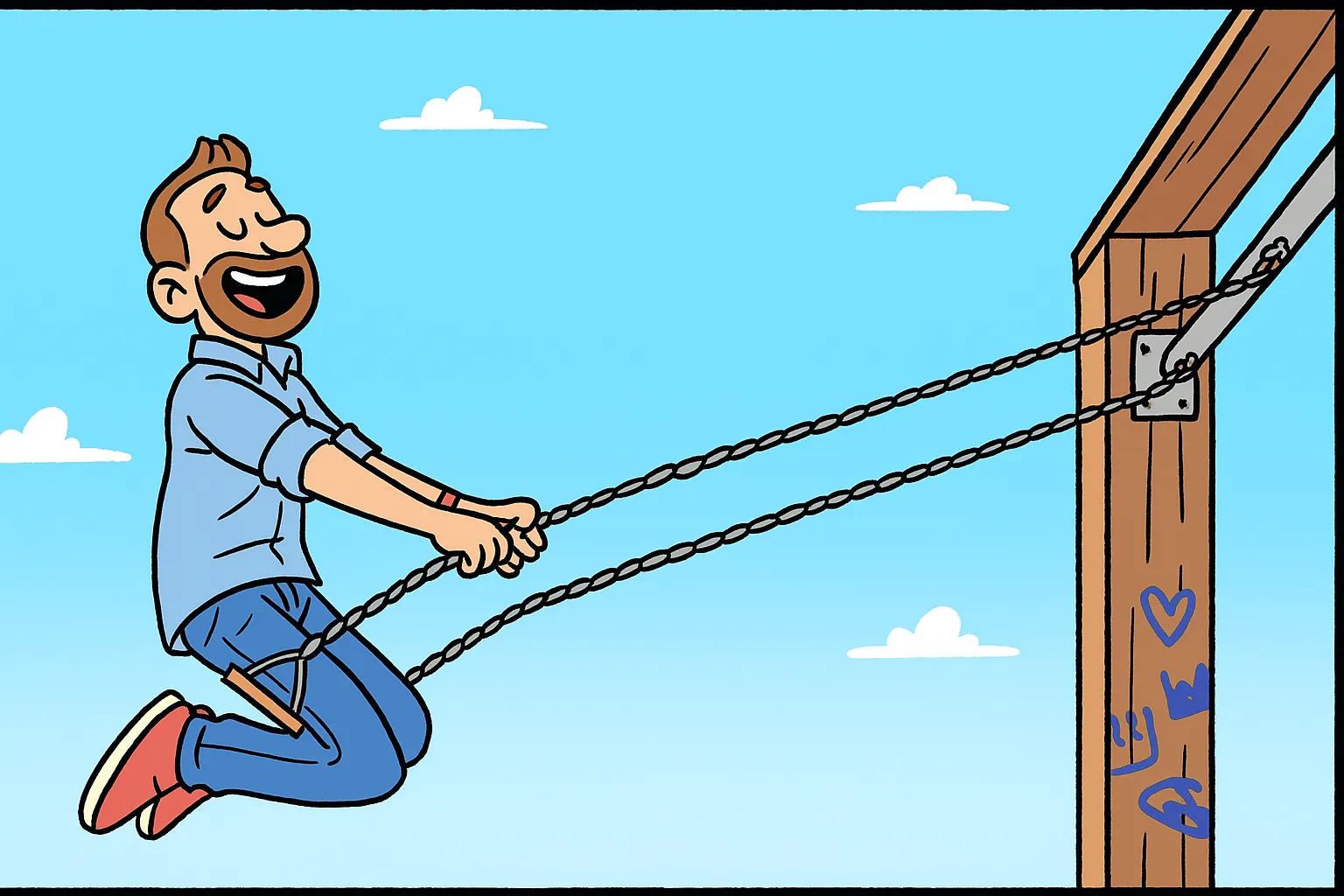
There’s a moment in every swing’s arc where momentum carries you to the highest point and physics takes over. For just an instant, you hang there — not moving backward anymore, not yet moving forward. The world seems to pause while forces realign for the next phase of motion.
Sunday felt like that moment.
Saturday’s archaeological expedition had revealed the scope of what needed to happen. The Genesis Vision waiting to be implemented. The methodology patterns that could be systematized. The documentation debt that was preventing progress. A dozen insights that could each become their own development track.
But instead of immediately swinging into action, I spent Sunday in strategic pause. Consolidating. Organizing. Converting overwhelming discovery into manageable next steps.
Sometimes the most important work happens in the stillness between movements.
The consolidation imperative
After 118 days of development logs got compressed into strategic insights, my brain wanted to race in every direction at once. Build the conversational interface! Implement the learning system! Fix the documentation! Update the roadmap!
The archaeological discoveries had created what my Chief of Staff called “cognitive overload from managing context across multiple dimensions.” Everything seemed urgent because everything was finally visible.
I felt stretched as thin as a crepe.
But rushing from insight to implementation would have meant losing half the insights along the way. Discovery creates potential energy. Consolidation converts that potential into directed force.
So Sunday became about organization rather than execution. Taking the scattered pieces of Saturday’s breakthrough and arranging them into coherent next steps.
The architecture of pausing
My Chief Architect spent the day with me as we kept methodically fixing documentation links — 101 broken references resolved through systematic categorization and repair. Not glamorous work, but the kind that creates foundation for everything else.
My Chief of Staff and I also completed the comprehensive track and epic review that had been ongoing. All the threads of development work mapped, prioritized, and organized into clear sequences.
The day produced a 9-phase execution plan. Not because planning is more important than building, but because building without direction wastes the energy that discovery creates.
The pause wasn’t procrastination — it was strategic preparation. Creating the conditions where next Monday’s execution could be focused rather than scattered.
Between discovery and execution
There’s a particular kind of pressure that comes after breakthrough moments. The urge to capitalize immediately, to strike while the iron is hot, to maintain momentum before insights fade.
But insights don’t fade if you consolidate them properly. The vision documents weren’t going anywhere. The methodology patterns would still be there Monday morning. The archaeological discoveries were now preserved in strategic knowledge assets.
What would fade was the clarity about priorities. Without Sunday’s consolidation work, Monday could have started with twenty parallel initiatives and ended with twenty half-finished experiments.
For a moment there was that feeling of stillness right before an umpire shouts “Play ball!”
The strategic pause creates space for conscious choice about direction rather than reactive response to opportunity.
The rhythm of sustainable progress
Looking across months of development logs, I’m starting to recognize the pattern. Major breakthroughs followed by consolidation phases. Archaeological discoveries followed by strategic organization. Vision creation followed by execution planning.
Not because planning is more important than building, but because sustainable progress requires both expansion and integration phases. You need time to discover what’s possible. You also need time to organize discoveries into actionable next steps.
Plus, I’m just one person! Stuff gets away from me. I forget. I drift. I’m even starting to think about my own “context window” and how much one person can keep track of, even with notes and tools and bots and such.
The trapeze artist doesn’t grab the next bar while still swinging away from it. They wait for the moment when momentum shifts, when the forces align, when the reach becomes natural rather than forced.
What lives in the pause
Sunday’s consolidation work created several forms of value that immediate execution couldn’t have achieved:
Systematic documentation repair that prevents future broken references rather than just fixing current ones.
Track and epic organization that provides navigation for months of development ahead. I’ve even changed how we name our GitHub tickets so I can more easily sort by track or epic.
9-phase execution planning that converts archaeological insights into linear progress rather than parallel confusion.
[CHRISTIAN TO POLISH: Need another beat here about what strategic pause enables vs what immediate action would have cost]
The pause also created something less tangible but equally important: confidence that the next phase of work was grounded in systematic thinking rather than reactive momentum.
Recognizing pause moments
Not every discovery needs strategic pause. Small insights can flow directly into implementation. But when breakthrough creates multiple high-value directions, the instinct to immediately pursue all of them usually leads to pursuing none of them effectively.
The trigger for strategic pause is the same as the trigger for archaeological work: when forward momentum starts feeling scattered rather than directed. When opportunity creates overwhelm rather than clarity.
Sometimes stopping work can mean avoidance, getting stuck, or just not wanting to do it. Other times, stopping is the only sensible way forward.
The “trapeze” moment doesn’t last long — forces realign and motion resumes. But that brief pause is what makes possible the next graceful arc of movement.
By Monday morning, the strategic pause had done its work. Direction was clear, priorities were organized, and focus was possible. Time to move from the stillness of consolidation into the deliberate motion of inchworm mode.